
How to Clean and Maintain Your Sneakers: A Complete Care Guide
Learning how to clean and maintain your sneakers properly helps protect their appearance, reduce unpleasant odors, and prevent avoidable material damage. The safest method depends on the shoe’s construction and whether the upper contains smooth leather, synthetic leather, canvas, mesh, knit, suede, nubuck, rubber, or a combination of materials.
A single sneaker may require several different cleaning methods. The outsole contacts the ground and can usually tolerate firmer brushing. The midsole often shows visible scuffs but may contain painted foam or decorative details that require controlled treatment. The upper is generally more delicate, while the lining and insole need enough ventilation to dry fully before the shoe is worn again.
Many cleaning problems begin when the entire sneaker is treated as one washable object. Soaking can affect shape, padding, colors, adhesives, and bonded overlays. Aggressive brushing may fray mesh or disturb suede, while direct heat can affect foam, glue, and surface finishes.
Official care resources from Nike, New Balance, Converse, and Vans generally favor hand cleaning and natural air drying for many sneaker types. Instructions still vary between models, so product-specific guidance should always take priority over general household advice.
In my experience, regular light maintenance is safer than waiting until dirt becomes deeply embedded. Brushing dry soil away after wear, treating fresh marks promptly, rotating frequently used pairs, and allowing damp shoes to dry completely can reduce the need for harsh restoration methods.
This guide explains how to evaluate sneaker materials, select safe tools, clean each component, treat common stains, control odors, maintain footwear between deep cleans, and avoid mistakes that may shorten the useful life of the shoes.
What to Know Before Cleaning Your Sneakers
Before applying water, soap, or any specialist cleaner, inspect the sneakers carefully. Look for a care label, material description, product page, original packaging, or official manufacturer instructions for the exact model. General guidance may work for a basic canvas shoe but be unsuitable for a sneaker containing suede overlays, reflective details, printed graphics, metallic finishes, or glued decoration.
Identify every visible material rather than assuming the entire upper is the same. A running shoe may combine mesh, synthetic reinforcement, foam padding, rubber, printed branding, and bonded panels. A lifestyle sneaker may use leather around the toe, suede near the heel, and textile lining around the collar. These areas should be cleaned separately.
Check the shoe for loose stitching, sole separation, cracks, exposed foam, peeling synthetic material, or weakened fabric. Cleaning may worsen existing damage if a brush catches a loose thread or water enters an open seam. Structural repairs should be considered before deep cleaning.
Testing is essential. Apply the planned solution to a small, hidden area such as the edge of the tongue or inner collar. Allow the test spot to dry completely before evaluating color, texture, stiffness, or finish changes.
Prepare a clean working area and keep the upper-cleaning tools separate from the outsole brush. Dirt, grease, and grit collected from the sole should not be transferred to a pale fabric or leather upper.
The objective is controlled cleaning, not complete saturation. Use the least moisture, product strength, and physical pressure required to reach an acceptable result.
Identify the Material and Read the Care Guidance
Begin with the manufacturer’s product description whenever it is available. Synthetic leather can resemble natural leather, while suede and nubuck may look similar despite having different finishes. Knit uppers may contain fused support zones, printed details, reinforced yarns, or hidden foam layers that react differently to water.
Smooth leather usually requires minimal moisture and gentle wiping. Synthetic leather may tolerate similar treatment but can peel, crack, or become dull when exposed to solvents or abrasive tools. Canvas is generally more tolerant of hand brushing, although colorfastness and glued construction still require caution.
Mesh and knit uppers need a soft brush and controlled pressure. Nike’s care guidance for mesh and Flyknit-style footwear recommends cool or lukewarm water, mild soap, and brushing in the direction of the knit. Aggressive scrubbing can catch fibres or disturb the surface.
Suede and nubuck need a different process. Dry dirt should usually be removed with a suede brush, while selected marks may respond to a suede eraser or approved specialty cleaner. Ordinary soaking can flatten the nap, spread stains, or create water marks.
Mixed-material sneakers should be divided into cleaning zones. Keep leather conditioner away from mesh and suede cleaner away from unrelated textiles.
When caring for rare, vintage, hand-painted, collectible, or expensive sneakers, consult the brand or a reputable professional cleaner if the material guidance is unclear. Testing an unsuitable method on a valuable pair can create permanent discoloration or texture damage.
Assemble a Safe Sneaker-Cleaning Kit
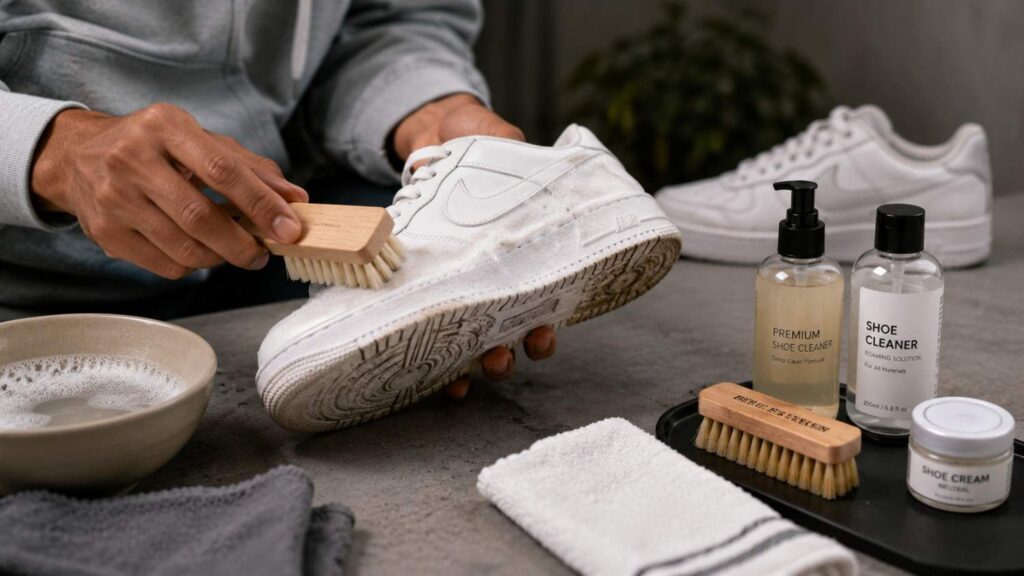
A reliable sneaker-cleaning kit does not need to include a large collection of branded products. Begin with a soft-bristled shoe brush or clean toothbrush, a separate sole brush, several microfiber cloths, a small bowl, cool or lukewarm water, mild dye-free detergent, and absorbent paper.
The upper brush should be soft enough to clean fabric without roughening it. A second, slightly firmer brush can be reserved for rubber outsoles and tread. Keeping these tools separate prevents mud, oil, grit, and road residue from reaching the upper.
Add a suede brush and suede eraser when you own suede or nubuck footwear. These tools are designed to lift dry soil and restore surface texture without ordinary wet scrubbing. New Balance advises using material-specific cleaners for leather and suede rather than treating every upper like athletic mesh.
Include a flexible measuring spoon so the cleaning solution remains weak. Concentrated soap can leave residue, affect color, or alter the surface of certain materials. Nike advises using a small amount of mild soap instead of a strong detergent mixture.
A clean towel protects the work surface and absorbs moisture. A laundry bag may be useful for removable laces when their care instructions allow machine washing, although hand cleaning offers greater control.
Optional products include leather conditioner, material-compatible protector spray, sneaker deodorizer, replacement laces, new insoles, and shoe trees. These should be purchased only when suitable for the footwear you own.
Store the kit in one place and label specialty products clearly. This prevents accidental use of a suede cleaner on leather or an abrasive rubber product on a delicate upper.
| Sneaker Care Item | Primary Purpose | Best Used For |
|---|---|---|
| Soft-Bristled Brush | Removes loose dirt without damaging materials | Leather, mesh, canvas |
| Microfiber Cloth | Wipes away soap and moisture gently | Leather and synthetic uppers |
| Mild Cleaning Solution | Cleans surface stains safely | General sneaker cleaning |
| Suede Brush & Eraser | Restores suede texture and removes dry marks | Suede and nubuck shoes |
| Shoe Trees or Paper Stuffing | Maintains shape during drying and storage | All sneaker types |
| Protective Spray | Helps repel water and stains | Clean, dry sneakers before regular use |
How to Clean Sneakers Step by Step
A consistent sequence makes sneaker cleaning safer and more efficient. The process should begin only after wet mud has dried enough to brush away. Cleaning wet mud immediately can spread it across the upper and push soil deeper into canvas, mesh, seams, or textured rubber.
Start by photographing the lacing pattern if it is complicated. Remove the laces and any insole designed to come out easily. Knock the soles together outdoors and use a dry brush to remove dust, sand, and loose debris.
A practical cleaning sequence is:
- Identify every material and review the care guidance.
- Remove the laces and removable insoles.
- Brush away loose dirt from the upper, midsole, outsole, and tread.
- Prepare a weak solution of mild soap and cool or lukewarm water.
- Wash the laces separately.
- Clean the outsole with a dedicated brush.
- Clean the midsole with controlled pressure.
- Treat the upper according to its material.
- Remove soap residue with a damp microfiber cloth.
- Blot excess moisture and air-dry at room temperature.
Work on one shoe at a time so you can compare progress with the untreated pair. This helps prevent unnecessary repeated cleaning and shows whether the method is producing an even result.
Use small amounts of solution and refresh the water when it becomes dirty. Continuing with heavily soiled water can redeposit grime on pale fabric.
Keep every component separate until it is completely dry. Laces, insoles, padding, and the interior may remain damp after the outer surface appears ready to wear.
Prepare the Laces, Insoles, and Dry Surfaces
Removing the laces exposes the tongue, eyelets, and hidden folds where dirt often collects. It also allows the laces to be cleaned evenly instead of leaving darker sections where they passed through the shoe.
Hand-wash the laces in a mild soap solution. Massage them gently between your fingers, rinse away all detergent, and blot them with a towel. White laces may require more than one gentle wash, but strong bleach can weaken fibres or change colored tips and printed details.
Remove the insoles only when they are designed to come out without tearing or stretching. Clean them with a lightly dampened cloth or soft brush and a small amount of solution. Avoid soaking foam insoles because they can hold moisture for an extended period. Allow them to dry separately and completely.
Before using water on the sneaker, dry-brush the upper, seams, midsole, outsole, and tread. Nike recommends removing dry debris before wet cleaning because this reduces the amount of scrubbing and solution required.
Pay attention to the gap between the upper and midsole, stitching channels, textured rubber, logo edges, and tread grooves. A blunt tool may help loosen compacted dirt from deep outsole channels, but it should not scratch foam, paint, or rubber.
Lightly stuff the shoes with absorbent paper or a correctly fitting shoe tree. This supports the upper and gives you a firmer cleaning surface.
Thorough preparation is not optional. Removing dry soil first makes the wet-cleaning stage faster, cleaner, and less damaging.
Clean the Soles and Uppers, Then Air-Dry
Begin with the outsole because it normally contains the heaviest dirt. Apply the mild solution to the dedicated sole brush rather than pouring water directly onto the shoe. Work through the tread and wipe away loosened soil before moving to the midsole.
The midsole may be made from rubber, painted foam, or a combination of materials. Use a softer brush or microfiber cloth on decorative areas. Avoid aggressive abrasion because some visible marks may be actual finish loss rather than removable dirt.
Clean the upper in small sections. Apply the solution to the cloth or brush, then use controlled circular motions or strokes that follow the material structure. Mesh and knit need light pressure, canvas can tolerate more agitation, leather should be wiped gently, and suede generally requires a dry specialty process.
Blot dirty moisture with a clean cloth as you work. Do not allow dirty solution to remain on the upper and dry back into the surface.
When cleaning is complete, use a separate damp cloth to remove soap residue. Remaining detergent can create pale marks, stiffness, or faster resoiling.
Blot the shoes with a towel and stuff them loosely with absorbent paper. Place them in a ventilated indoor area at room temperature. Replace damp paper when necessary.
Converse advises natural room-temperature drying and warns against direct heat. Do not use radiators, hair dryers, tumble dryers, or intense sunlight.
Drying time varies with the material, humidity, ventilation, and moisture used. Reinstall the insoles and laces only when every part feels completely dry.
How to Clean Different Sneaker Materials
Material-specific cleaning is the most important principle in this sneaker cleaning guide. The amount of moisture, brush firmness, detergent strength, and drying method should be chosen according to the material rather than the color or price of the shoe.
A technique that improves rubber may damage suede. The pressure suitable for sturdy canvas may fray a knit upper. Leather can become dry or discolored when overwashed, while foam-backed mesh may retain moisture long after the surface appears clean.
Use the table below as a starting point, then check the exact product-care instructions:
| Sneaker Material | Recommended Basic Method | Useful Tools | Avoid |
|---|---|---|---|
| Smooth leather | Wipe gently with diluted mild soap and a damp cloth | Soft cloth, soft brush | Soaking, harsh detergent, direct heat |
| Synthetic leather | Controlled wiping and spot cleaning | Microfiber cloth | Abrasive scrubbing, strong solvents |
| Canvas | Hand-clean with mild soap and a soft brush | Soft brush, cloth | Routine machine washing, chlorine bleach |
| Mesh or knit | Gentle brushing with cool or lukewarm solution | Very soft brush | Hot water, bleach, snagging, hard scrubbing |
| Suede or nubuck | Dry brushing and material-specific cleaner | Suede brush, suede eraser | Soaking, ordinary wet scrubbing |
| Rubber soles | Mild solution and dedicated sole brush | Toothbrush or sole brush | Sandpaper, strong solvents |
| Removable insoles | Gentle surface cleaning and complete air drying | Cloth or soft brush | Reinstalling while damp |
Mixed-material shoes should be divided into zones. Clean each section separately and prevent specialty products from spreading onto unrelated surfaces.
Official guidance from Nike, New Balance, Converse, and Vans consistently emphasizes mild cleaners, controlled hand treatment, material awareness, and natural air drying. These principles reduce the risk of color changes, texture damage, shape distortion, and adhesive problems.
Leather, Synthetic Leather, and Canvas
Smooth leather should be cleaned with limited moisture. Brush away loose dust, then wipe the surface with a microfiber cloth containing a small amount of diluted mild soap. Work carefully around perforations, stitching, printed logos, bonded edges, and painted panels.
Use another lightly dampened cloth to remove cleaning residue. Allow the shoes to dry naturally before applying any conditioner. A compatible leather conditioner may help maintain flexibility, but it should be tested first because some formulas can darken leather, alter shine, or affect coated finishes.
Synthetic leather often tolerates gentle wiping, but it should not automatically receive products intended for natural leather. Strong solvents, abrasive sponges, and repeated scrubbing can cause peeling, cracking, dullness, or finish separation.
Canvas generally responds well to controlled hand cleaning with mild soap and a soft brush. Work in small areas, avoid saturating the interior, and remove detergent thoroughly. Converse advises against machine washing and machine drying its canvas and leather footwear, while Vans describes hand cleaning as the safer general approach.
White canvas may show dirt easily, but whitening methods should be used carefully. Chlorine bleach can weaken fibres, affect adhesives, or create uneven yellowing. Follow the manufacturer’s instructions before using any bleaching or brightening product.
Dark or brightly colored canvas should be tested for colorfastness. Repeated wetting, strong detergent, or direct sunlight during drying may create fading or visible water boundaries.
For all three materials, gentle repetition is safer than one aggressive treatment.
Mesh, Knit, Suede, and Nubuck
Mesh and knit uppers require controlled cleaning because their open structures collect dust while remaining vulnerable to snagging, stretching, and abrasion. Begin with dry brushing, then apply a small amount of mild solution with a very soft brush.
Nike recommends cool or lukewarm water and gentle brushing in the direction of the knit pattern for mesh and Flyknit-style uppers. Hot water, bleach, strong chemicals, and hard scrubbing can affect dyes, yarns, and bonded components.
Do not saturate foam-backed mesh. Moisture can become trapped beneath the outer layer and increase drying time. Blot frequently and repeat a light cleaning cycle instead of trying to remove every mark through force.
Suede and nubuck require a substantially drier approach. Allow wet dirt to dry, then lift it with a suede brush. Brush evenly and follow the direction of the nap, which is the raised surface texture that gives suede its characteristic appearance.
A suede eraser may help remove selected dry marks. Specialty cleaner should be applied only according to the footwear and product instructions. Uneven wet application can create changes in color or texture.
Converse advises dry brushing suede and generally avoiding ordinary wet cleaning. New Balance recommends material-specific leather or suede cleaners.
Once suede is completely dry, brush it gently to restore the nap. Do not use an ordinary stiff brush, leather conditioner, or canvas-cleaning solution on suede.
Expensive, vintage, deeply stained, or unusually colored suede may be safer with a professional footwear cleaner.
How to Remove Stains, Scuffs, and Sneaker Odors
Stain removal should always begin with identification. Dry soil, mud, oil, grass, food, salt, ink, dye transfer, and surface scuffing interact differently with leather, canvas, mesh, suede, foam, and rubber. A universal household mixture is unlikely to be safe for every combination.
Blot fresh liquid stains instead of rubbing them outward. Allow wet mud to dry before brushing. For remaining marks, use diluted mild soap and repeat the treatment gradually. Stop when the material begins showing signs of wear.
Rubber midsoles often respond to controlled cleaning with a dedicated brush or damp cleaning sponge. However, products and tools suitable for rubber should be kept away from suede, leather, printed graphics, colored foam, and delicate textiles.
Odor requires attention to moisture and the shoe interior rather than perfume applied to the outside. Remove the insoles when appropriate, ventilate the shoes after wear, and never store damp footwear in a closed container.
Nike’s official odor guidance describes baking soda and diluted vinegar methods. Any deodorizing liquid should be tested and applied lightly so it does not saturate foam, lining, dyes, or adhesives.
Persistent odor may indicate that the insoles or lining have retained moisture and contamination. In some cases, replacing the insoles is more effective than repeated soaking.
Stain and odor treatment should preserve the material rather than pursue an unrealistic factory-new appearance. A mark that requires destructive scrubbing is often better left faintly visible.
Treat Mud, White Soles, and Everyday Scuffs
Allow mud to dry completely before cleaning. Dry mud can be lifted from canvas, mesh, leather, and rubber with less spreading than wet soil. Brush outdoors and work carefully around seams, tread patterns, textured surfaces, and decorative edges.
For remaining dirt, prepare a weak mild-soap solution and apply it with a soft brush or cloth. Keep the outsole and midsole process separate from the upper so heavily soiled water is not transferred to pale fabric.
Rubber tread can usually tolerate a firmer brush than the upper. The midsole may require a softer tool, especially when it contains painted foam, logos, or decorative finishes.
A lightly dampened cleaning sponge may improve white rubber where the manufacturer permits it. Keep abrasive sponges away from canvas, leather, suede, printed graphics, and colored foam because they may remove finish as well as dirt.
Nike suggests that an equal-parts baking-soda-and-water paste may be useful for selected light-colored areas. Test the mixture first, apply it only where appropriate, and remove all residue from seams and textured rubber.
Treat everyday scuffs promptly but do not keep scrubbing after the surface becomes dull. Some marks are physical abrasions or missing color rather than removable dirt.
When a stain does not improve after two or three gentle attempts, stop and reassess. Repeated aggressive treatment can cause a larger, more permanent mark.
For valuable shoes, professional cleaning may be safer than experimenting with progressively stronger household methods.
Control Moisture, Insoles, and Unpleasant Odors
Odor management begins immediately after wear. Loosen the laces, open the tongue, and place the sneakers in a ventilated area. If the insoles are removable, take them out so moisture can escape from both the shoe interior and the insole surface.
Do not leave damp sneakers inside a gym bag, plastic container, or closed cupboard. Trapped moisture creates an environment in which odors can become more persistent and padding may take much longer to dry.
Clean removable insoles with a limited amount of mild solution. Blot away moisture and allow them to dry separately. Insoles that are deeply compressed, damaged, or repeatedly odorous may need replacement.
Nike describes baking soda as an odor-absorbing option. One controlled approach is placing dry deodorizing powder inside tied socks and leaving one sock in each shoe overnight. This keeps loose powder away from the lining and makes removal easier.
Nike also discusses a diluted vinegar spray for the interior. Because moisture can affect foam, dyes, adhesives, and drying time, test the solution first and apply only a light mist. Do not saturate the shoe.
Avoid masking the problem with strong fragrance. Persistent odor may result from damp padding, dirty insoles, insufficient drying time, or repeated wear without rotation.
Clean socks and dry feet also support odor control. Rotating between pairs allows each sneaker more time to release internal moisture.
Wear the shoes again only when the lining and insole are completely dry.
Related Articles
How to Maintain Sneakers Between Deep Cleans
Preventive maintenance reduces the need for intensive sneaker cleaning. A simple routine of brushing, spot treatment, ventilation, and correct storage is usually more effective than repeatedly soaking or scrubbing heavily soiled footwear.
After wearing the sneakers, inspect the upper, midsole, and outsole. Remove dry dust and soil before it becomes embedded in stitching or fabric texture. Wipe minor midsole marks with a damp cloth and address spills before they set.
Do not apply protective products to dirty or damp shoes. Water- and stain-repellent sprays should be used only on clean, fully dry footwear. The product must also be compatible with every exposed material. A spray suitable for canvas may not be appropriate for suede, glossy leather, knit, or printed surfaces.
Storage conditions affect color, shape, moisture, and bonded construction. Sneakers should remain dry, ventilated, and protected from excessive heat or prolonged direct sunlight. Vans recommends indoor room-temperature drying rather than radiators, dryers, or strong sun.
Light paper stuffing or a correctly sized shoe tree can support the toe box and reduce deformation. Do not force a rigid tree into soft knit footwear or overstuff a flexible upper.
Athletic footwear should also be inspected for structural wear. New Balance advises paying attention to physical condition and changes in comfort rather than relying only on a universal replacement distance. Worn tread, torn support structures, separating soles, or new discomfort may indicate that cleaning is no longer the primary issue.
A strong maintenance routine protects the shoes without creating unnecessary exposure to water, detergent, or abrasion.
For premium materials and high-end footwear, these additional luxury sneaker care recommendations provide useful maintenance practices that complement the routine described above.
| Usage Type | Recommended Cleaning Frequency | Routine Maintenance | Deep Cleaning |
|---|---|---|---|
| Daily Casual Wear | Every 1–2 weeks | Brush off dust and wipe midsoles after use | Monthly |
| Running & Gym Shoes | Weekly | Air-dry after every workout and clean insoles regularly | Every 2–4 weeks |
| White Fashion Sneakers | Weekly | Remove stains immediately to prevent discoloration | Monthly or as needed |
| Suede & Nubuck Sneakers | As needed | Dry brush after use and avoid moisture | Only when visibly dirty |
| Collector or Limited Edition Sneakers | Rarely | Dust regularly and store properly | Professional cleaning if required |
Follow a Daily, Weekly, and Monthly Care Routine
After each wear, loosen the laces and allow the interior to ventilate. If the sneakers became wet from rain, exercise, or perspiration, remove the insoles when appropriate and dry them separately. Brush away dry dirt before putting the shoes into storage.
A daily routine does not require wet cleaning. A quick inspection and light brushing often prevent soil from collecting around seams, mesh openings, tread, and the edge between the upper and midsole.
Once a week, examine frequently worn sneakers more carefully. Look for new stains, loose stitching, damaged laces, sole debris, separating edges, worn heel lining, or areas where the upper is beginning to crease or crack.
Clean isolated marks as soon as practical. Spot cleaning requires less water and agitation than a full wash. Wipe the midsole with a damp cloth and clean the outsole when accumulated dirt affects traction or spreads onto indoor surfaces.
A monthly deep clean may be suitable for heavily used everyday shoes, but frequency should depend on climate, material, activity, color, and level of soiling. Suede lifestyle sneakers may need occasional brushing rather than monthly wet treatment.
Keep a soft brush and microfiber cloth near the shoe-storage area. Maintenance is more likely to happen when the tools are convenient.
Record any specialty products used on valuable pairs. This helps prevent incompatible combinations and allows you to repeat a successful process.
Regular care should remain gentle. Excessive wet cleaning can create wear even when the shoes appear cleaner afterward.
Store, Protect, and Rotate Your Sneakers Properly
Store only clean and completely dry sneakers. A storage box can trap moisture when the shoes are returned too soon after wear or cleaning. Frequently worn pairs may benefit from an open rack that allows greater airflow.
Choose a location with moderate temperature and low humidity. Avoid damp floors, hot vehicle interiors, direct sunlight, radiators, and spaces that experience large temperature changes.
Use the original box when it is clean, dry, and stored in an appropriate environment. High-value pairs may benefit from acid-free tissue or breathable shoe bags, but airtight plastic should be used cautiously in humid conditions.
Light paper stuffing can support the toe box and absorb remaining moisture. Replace the paper when it becomes damp. Shoe trees may help structured leather sneakers retain shape, but they should fit without stretching the upper.
Apply a protector spray only when it is specifically compatible with the material. Clean and dry the shoes first, test the product, and follow the ventilation and safety instructions on the label. More spray does not necessarily provide better protection.
Rotate footwear when possible, especially after exercise, long commutes, or wet-weather use. Giving each pair time to dry can reduce odor and moisture buildup.
Do not place heavy boxes or objects on top of sneakers. Compression can deform collars, toe boxes, midsoles, and decorative components.
Provide enough space between high-value pairs to prevent rubbing, color transfer, or contact between metal hardware and delicate surfaces.
Proper storage does not stop ordinary aging, but it reduces avoidable deformation, moisture damage, fading, and contamination.
If you want to extend the lifespan of frequently worn footwear, this practical guide to long-term sneaker care reinforces many of the storage, protection, and rotation habits covered in this section.
Common Sneaker-Cleaning Mistakes to Avoid
Most sneaker-cleaning damage results from excessive water, heat, chemical strength, or physical force. Modern sneakers may appear durable while containing glued layers, foam cushioning, printed finishes, synthetic coatings, textile reinforcement, and decorative elements that respond poorly to aggressive methods.
Automatic washing is one of the most common risks. The process exposes shoes to prolonged water, detergent, agitation, spinning, and impact. Even when the outer fabric survives, internal padding, shape, bonded overlays, and adhesives may be affected.
Nike and New Balance generally advise against routine machine washing. Converse states that its canvas and leather footwear should not be machine-washed or machine-dried. Vans also describes hand cleaning as the safer general option, even though individual products may have different instructions.
Direct heat creates another risk. Hair dryers, tumble dryers, radiators, heaters, and intense sunlight can affect materials, shape, foam, color, and bonded construction. Natural air drying at room temperature remains the safer default.
Strong chemicals do not guarantee a better result. Concentrated detergent, bleach, solvents, degreasers, and abrasive products may remove finish, weaken fibres, or create discoloration.
The final mistake is attempting to clean structural damage. Cracked foam, torn support materials, worn tread, separating soles, and persistent discomfort require repair or replacement rather than stronger scrubbing.
The safest process uses the weakest effective cleaner, the softest effective brush, and the smallest practical amount of moisture. Stop when the shoe is acceptably clean rather than pursuing perfection at the cost of material integrity.
Avoid Machine Washing, Soaking, and Direct Heat
A washing machine exposes sneakers to repeated impact, prolonged soaking, spinning, detergent, and uncontrolled movement. These forces may distort the upper, compress padding, loosen bonded components, or affect decorative overlays.
Some product-specific instructions may permit machine washing, but that permission should never be assumed for every shoe from the same brand. Check the care guidance for the exact model and material combination.
Soaking creates similar concerns. Water can enter foam, lining, stitching, and spaces between bonded layers. The surface may feel dry while moisture remains trapped inside the shoe for many hours.
Excessive water can also create dye transfer, tidemarks, stiffness, or changes in shape. A controlled cloth-and-brush process gives the owner greater control over where moisture is applied.
Do not place sneakers in a tumble dryer or beside a heater. Converse recommends room-temperature drying and warns against direct heat. New Balance also advises avoiding dryers because many footwear materials should not be exposed to high temperatures.
Instead, blot the shoes with a towel, lightly support their shape with paper or an appropriate shoe tree, and place them in a well-ventilated indoor area. Replace wet paper as necessary.
Plan the cleaning process when the sneakers will not be needed immediately. Rushing often leads to direct heat or wearing the shoes before the interior is dry.
Patience is part of sneaker care. Slow air drying protects the shoe more effectively than attempting to force moisture out quickly.
Avoid Harsh Chemicals and Excessive Scrubbing
Household bleach, concentrated detergents, strong solvents, alcohol-heavy products, and general-purpose degreasers may damage sneaker materials. A product that is safe for tile, metal, or kitchen surfaces is not automatically suitable for leather, mesh, foam, canvas, suede, or rubber.
Prepare a weak solution and test it on a concealed section. Allow the test spot to dry completely before continuing because discoloration, stiffness, or texture changes may become visible only after evaporation.
Use the softest brush capable of removing the soil. A stiff brush can roughen leather, disturb suede nap, fray canvas, snag knit, or damage printed details. Reserve firmer tools for durable rubber tread.
Do not keep scrubbing after the surface begins to look dull, fuzzy, uneven, or faded. Some apparent stains are actually physical abrasion, missing color, exposed base material, or damaged coating. Cleaning cannot replace material that has worn away.
Avoid mixing several household cleaning agents. Unplanned combinations may react unpredictably, increase chemical strength, create residue, or produce unnecessary exposure.
Remove detergent residue with a clean damp cloth. Dried soap can stiffen fabric, create pale marks, attract additional dirt, or irritate skin around the collar and lining.
Use specialist products only for the materials they identify. Suede cleaner, leather conditioner, whitening solution, and protector spray are not interchangeable.
When a valuable sneaker has oil, ink, mold, severe dye transfer, or extensive suede staining, professional cleaning is usually safer than using several increasingly aggressive home treatments.
Quick Answer About How to Clean and Maintain Your Sneakers
The safest way to clean and maintain your sneakers is to identify every material before applying water or cleaning products. Remove the laces and removable insoles, then use a dry, soft-bristled brush to remove loose dust, sand, and mud. Prepare a weak solution of mild soap and cool or lukewarm water. Clean the outsole, midsole, and upper separately so dirt from the bottom of the shoe is not transferred to more delicate materials.
Smooth leather and synthetic leather should generally be wiped rather than soaked. Canvas can tolerate careful hand brushing, while mesh and knit need gentle strokes that will not snag the fibres. Suede and nubuck usually require dry brushing, a suede eraser, or a material-specific cleaner rather than ordinary wet washing.
After cleaning, remove soap residue with a damp microfiber cloth. Blot excess moisture, lightly stuff the shoes to support their shape, and leave them in a ventilated indoor area at room temperature. Avoid radiators, tumble dryers, hair dryers, and prolonged direct sunlight.
Do not automatically place sneakers in a washing machine. Nike, New Balance, Converse, and Vans generally recommend controlled hand cleaning for many footwear types, although instructions can vary by model. Always prioritize the official care guidance for the exact pair.
Regular dry brushing, prompt spot cleaning, proper ventilation, and suitable storage reduce the need for aggressive deep cleaning and help preserve the color, texture, shape, and bonded construction of the shoes.
Frequently Asked Questions About How to Clean and Maintain Your Sneakers
People researching how to clean and maintain your sneakers often want a single answer that applies to every pair. In practice, the correct method depends on the upper material, sole construction, color, adhesives, decorations, and official care instructions.
The most important principle is to begin gently. Dry brushing, spot cleaning, and limited moisture should come before soaking, abrasive tools, or strong products. A sneaker does not need to look completely unworn after every cleaning session. Ordinary signs of use are often less damaging than repeated aggressive restoration.
Machine washing is one of the most common questions. Official brand guidance frequently favors hand cleaning because it allows greater control over moisture, pressure, and material treatment. Some individual shoes may have different instructions, so the product-specific care label remains the most reliable authority.
Drying time also varies. Surface fabric may feel dry while the lining, foam, or insole remains damp. The sneakers should not be worn or stored in a closed box until every component is dry.
White sneakers, suede, and odor problems require particular care. Whitening products may affect adhesives and color, suede should generally remain as dry as possible, and odor control should focus on ventilation and moisture management.
The answers below expand on the most common search questions. They provide safe starting points, but the official guidance for the exact sneaker should take priority when it differs from a general recommendation.
Can I put my sneakers in the washing machine?
Hand cleaning is the safer default for most sneakers. Washing machines expose shoes to prolonged water, agitation, spinning, detergent, and repeated impact. These forces may affect shape, foam cushioning, glued layers, decorative overlays, stitching, and color.
Nike and New Balance generally advise against routine machine washing. Converse states that its canvas and leather footwear should not be machine-washed or machine-dried. Vans also presents hand cleaning as the safer general method for many of its shoes.
An exception may exist when the manufacturer specifically states that a particular model is machine washable. That permission should not be extended automatically to other shoes from the same brand.
Before using a machine, check the product page, care label, or official support information for the exact sneaker. Consider every material, including suede overlays, printed details, leather panels, reflective components, and foam padding.
When machine washing is not explicitly permitted, remove the laces and insoles, dry-brush the shoes, and clean them manually with a mild solution. This method requires more time but provides greater control.
Never use a tumble dryer unless the manufacturer clearly allows it. Room-temperature air drying remains the safer choice for most sneaker construction.
What is the best homemade sneaker-cleaning solution?
A small amount of mild, dye-free laundry detergent or dish soap diluted in cool or lukewarm water is a practical starting point for many washable sneaker surfaces. The mixture should remain weak rather than producing a large amount of foam.
Apply the solution to a soft brush or microfiber cloth instead of pouring it onto the shoe. Test it on a hidden area and allow the spot to dry before treating a larger section.
This general solution may be suitable for rubber, selected canvas, mesh, knit, smooth leather, or synthetic leather when used carefully. However, the amount of moisture and agitation should change according to the material.
Suede, nubuck, delicate leather, hand-painted shoes, metallic finishes, and specialty coatings may require dedicated products. Ordinary household soap should not automatically be used on these surfaces.
Avoid adding bleach, strong solvents, or several household ingredients without product-specific guidance. A mixture that appears effective in a short video may affect dyes, finishes, adhesives, or fibres.
The best homemade solution is not the strongest one. It is the mildest mixture that removes the dirt without changing the material.
For valuable footwear, a manufacturer-approved cleaner or professional service may provide a lower-risk option than experimentation.
How often should I clean my sneakers?
There is no universal cleaning schedule because frequency depends on wear, activity, climate, material, color, and storage. A white running shoe used daily in wet conditions will need more attention than a dark leather lifestyle sneaker worn occasionally indoors.
Remove visible dirt and fresh spills promptly. Dry-brushing after wear may take only a minute and can prevent soil from becoming embedded. Spot cleaning is generally preferable to performing a full wet clean every time a small mark appears.
Frequently used sneakers should be inspected weekly for stains, loose stitching, sole debris, odor, damaged laces, or moisture. Deep cleaning may be appropriate monthly for heavily worn pairs, but it should not be performed automatically when lighter care is sufficient.
Suede and nubuck may need regular brushing rather than wet cleaning. Leather may benefit from occasional wiping and material-compatible conditioning. Athletic mesh may require cleaning after muddy or dusty use.
Excessive cleaning can create wear. Repeated wetting, detergent, and abrasion may alter finishes, fibers, or glued construction.
Develop a routine based on actual condition. Clean the shoes when dirt, odor, or residue affects their use or appearance, but always choose the least aggressive method likely to work.
How do I clean white sneakers without turning them yellow?
Begin with a weak, color-safe cleaning solution and avoid saturating the shoe. Clean the outsole, midsole, and upper separately so heavily soiled water is not spread across white fabric or leather.
Remove detergent residue carefully with a clean damp cloth. Soap left in canvas, mesh, stitching, or textured rubber can dry unevenly and create pale or yellowed areas.
Avoid chlorine bleach unless the manufacturer explicitly permits it. Bleach can weaken fibres, affect adhesives, react with finishes, or create uneven discoloration. Strong whitening products may improve one area while damaging another.
Air-dry the sneakers indoors at room temperature. Direct sunlight and concentrated heat can affect adhesives, foam, color, and surface finishes. Lightly stuffing the shoes with clean white paper can support the shape and absorb moisture. Avoid printed paper because ink may transfer.
Test every cleaning or whitening method in a concealed area. White sneakers may contain cream-colored foam, off-white fabric, printed logos, or tinted rubber that should not be treated as identical materials.
If yellowing is caused by oxidation, adhesive changes, or aged foam rather than surface dirt, ordinary cleaning may not reverse it completely.
The goal should be an even, clean result without weakening or discoloring the shoe.
How do I safely clean suede sneakers?
Allow mud or damp dirt to dry before attempting to remove it. Brushing wet suede may spread the stain, flatten the nap, and push soil deeper into the surface.
Use a clean suede brush and work gently in a consistent direction. This lifts dry soil and restores the raised fibres that create the suede texture. A suede eraser may help with selected dry scuffs and marks.
Avoid ordinary soaking and do not treat suede like canvas. Water can create visible boundaries, texture changes, or color variation. If a specialty cleaner is required, test it on a hidden section and follow both the cleaner and footwear instructions.
Use only a limited amount of product and apply it evenly. More cleaner does not guarantee a better result. Uneven saturation may become visible after drying.
Allow the suede to dry naturally at room temperature. Do not use a heater, hair dryer, or direct sunlight. Once dry, brush the surface gently to restore the nap.
A material-compatible protector spray may reduce future staining, but it should be tested and applied only to clean, dry suede.
Rare, expensive, vintage, deeply stained, or unusually colored suede is often safer with a professional cleaner.
How can I stop my sneakers from smelling?
Odor control begins with moisture management. After wear, loosen the laces, open the tongue, and allow air to reach the interior. Remove the insoles when suitable so they and the shoe can dry separately.
Do not leave damp sneakers inside a gym bag, vehicle, plastic box, or closed cupboard. Even a clean shoe may develop odor when internal foam and fabric remain wet.
Clean removable insoles with a small amount of mild solution and allow them to dry completely. Persistently odorous, damaged, or compressed insoles may need replacement.
Nike suggests dry baking-soda deodorizing methods and also discusses a diluted vinegar spray. Powder can be contained inside tied socks placed in the shoes overnight, which makes removal easier. Any liquid treatment should be tested and applied lightly.
Avoid soaking the interior. Moisture added during deodorizing must be allowed to evaporate fully before the shoes are worn.
Clean socks and dry feet also contribute to fresher footwear. Rotating between two or more pairs gives each sneaker additional drying time.
Heavy fragrance may temporarily cover odor without addressing the cause. Focus first on ventilation, drying, insole care, and cleaning.
Persistent odor despite proper care may indicate contaminated lining or materials that require professional cleaning or replacement.
How long should sneakers air-dry?
Sneaker drying time depends on the upper material, lining thickness, insole, foam, humidity, airflow, room temperature, and amount of water used during cleaning.
A lightly spot-cleaned leather sneaker may dry faster than a mesh running shoe whose padding became damp. Nike notes that many shoes may require at least eight hours, while New Balance advises allowing approximately 24 hours after its recommended cleaning process.
Treat these times as general references rather than guarantees. The exterior may feel dry while the tongue, heel padding, insole, or foam remains damp.
Remove the insoles and laces when appropriate, lightly stuff the shoes with absorbent paper, and place them in a ventilated indoor location. Replace the paper when it becomes wet.
Do not speed the process with a tumble dryer, heater, radiator, or hair dryer. Concentrated heat may affect adhesives, foam, color, shape, or surface finishes.
Check the shoe interior with your hand before wearing it. The lining should feel dry and return to room temperature rather than feeling cool from retained moisture.
Do not close damp sneakers in a box or cupboard. Complete drying protects the shoe and reduces the likelihood of persistent odor.
Conclusion: Build a Safe and Consistent Sneaker-Care Routine
Understanding how to clean and maintain your sneakers begins with identifying the materials and construction of the exact pair. Leather, synthetic leather, canvas, mesh, knit, suede, nubuck, rubber, foam, and textile lining do not respond identically to water, brushes, detergents, or protective products.
For most sneakers, the safest general process is to remove the laces and removable insoles, dry-brush loose dirt, prepare a weak mild-soap solution, clean the outsole, midsole, and upper separately, remove soap residue, blot excess moisture, and air-dry the shoes at room temperature.
Material-specific care is especially important for suede, nubuck, leather, mesh, and knit. Suede generally requires dry brushing or a suitable specialty cleaner. Knit needs gentle strokes that follow the material structure. Leather should be wiped rather than soaked, while canvas usually tolerates careful hand brushing.
Maintenance between deep cleans has equal importance. Remove soil promptly, ventilate damp footwear, clean or replace insoles when necessary, store sneakers away from direct heat, and rotate heavily used pairs.
Do not expect cleaning to repair structural wear. Separating soles, damaged tread, torn support materials, cracked foam, and persistent discomfort may require professional repair or replacement.
A consistent, gentle routine is safer than occasional aggressive restoration. The objective is not to erase every sign of wear. It is to preserve the shoe’s color, texture, construction, comfort, and practical life without causing more damage during cleaning than ordinary use created.
The Most Important Takeaway
Use the least aggressive method that achieves an acceptable result. Begin with dry brushing, then progress to a damp cloth or mild solution only when necessary. Specialty products should be used when the material requires them, not simply because they appear more powerful.
Always test the cleaner in a concealed area and allow the test spot to dry. Separate the outsole-cleaning process from the upper so dirt and abrasive tools are not transferred to delicate material.
Avoid saturating the sneaker. Limited moisture gives you greater control and reduces drying time. When wet cleaning is necessary, blot frequently and remove detergent residue thoroughly.
Allow the shoes to dry naturally at room temperature. Direct heat, automatic drying, and intense sunlight may affect adhesives, foam, color, shape, or surface finishes.
A sneaker does not need to look completely unworn after every cleaning session. Excessive scrubbing can remove coatings, roughen textiles, disturb suede nap, and make ordinary marks more visible.
The best sneaker-care routine balances cleanliness with material preservation. Clean the pair well enough for its purpose, but stop before the process begins causing surface wear.
Regular brushing, ventilation, prompt stain treatment, and proper storage often make the greatest long-term difference.
Your Next Sneaker-Care Step
Choose one pair of sneakers and identify every material used in its construction. Check the official product page or brand-care instructions before selecting a cleaner or brush.
Gather a soft upper brush, separate sole brush, microfiber cloths, mild soap, absorbent paper, and any material-specific tools such as a suede brush. Avoid purchasing several specialist products until you know they are suitable for the pair.
Remove the laces and removable insoles. Brush away dry dirt and test the cleaning solution in a hidden area. Allow the test section to dry before continuing.
Clean the outsole, midsole, and upper separately. Work in small sections, remove dirty moisture as you progress, and stop when the result is acceptable.
Blot the shoes, support their shape with clean paper, and place them in a ventilated indoor area. Do not reinstall the laces or insoles until every component is completely dry.
After cleaning, create a simple routine based on how often the sneakers are worn. A brief inspection, dry brush, and proper ventilation after use can make future cleaning easier.