
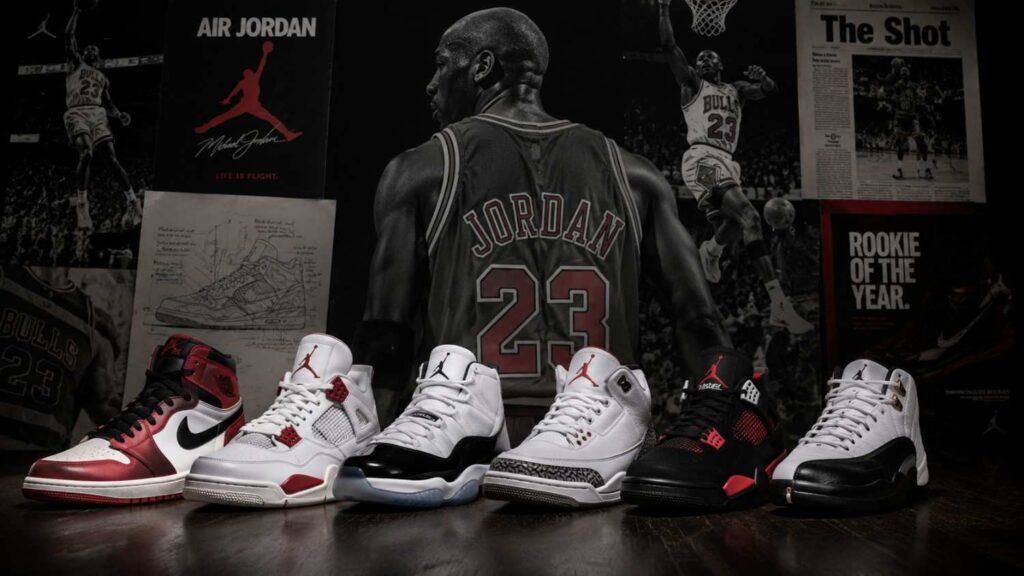
The History of Nike Air Jordans: From Basketball Shoe to Global Sneaker Icon
The History of Nike Air Jordans is one of the most important stories in sportswear, fashion, and modern branding. At first, Air Jordans were created as basketball shoes for a young Michael Jordan, who had just entered the NBA with the Chicago Bulls. But the line quickly became much more than footwear. It became a cultural statement, a business case study, and a symbol of confidence for athletes and fans around the world.
What makes this story so powerful is the way several forces came together at the right time. Nike needed a stronger position in basketball. Michael Jordan needed a footwear partner that believed in his future. The NBA had strict uniform rules that created controversy around bold shoe colors. Designers such as Peter Moore and Tinker Hatfield brought fresh ideas to performance footwear. Most importantly, Jordan performed at a level that made the shoes feel larger than life.
For beginners, understanding Nike Air Jordan history helps explain why certain sneakers sell out, why retro releases matter, and why older models are still discussed decades later. For advanced sneaker fans, the story reveals how design, scarcity, nostalgia, and athlete identity can create long-term cultural value. In my experience, the best way to understand Air Jordans is not just to memorize release dates. It is to study the people, moments, designs, and stories that turned a basketball shoe into a global icon.
Why The History of Nike Air Jordans Still Matters
The History of Nike Air Jordans still matters because the Air Jordan line changed the way people look at sneakers. Before Air Jordans became a global phenomenon, basketball shoes were mainly viewed as athletic equipment. Players wore them for grip, support, comfort, and performance. Fans might notice them, but few sneakers carried the same emotional, cultural, and commercial weight that Jordans eventually earned.
Air Jordans helped transform sneakers into personal identity pieces. A pair of Jordans could say something about a person’s taste, loyalty, era, and connection to basketball culture. This shift changed not only Nike but the entire footwear industry. Other brands began treating athletes as storytelling platforms rather than simple endorsers. Sneaker releases became events. Colorways developed meaning. Limited availability created demand. Collectors started preserving shoes as cultural artifacts.
The impact also extends into digital search behavior today. People still search for Air Jordan timeline details, Air Jordan 1 history, banned Air Jordan 1 facts, and the story behind Michael Jordan shoes because the product line remains relevant across generations. Parents who watched Jordan play now buy retros. Younger fans discover the shoes through fashion, music, resale platforms, video games, and social media. That cross-generational appeal is why Jordan Brand history continues to attract both casual readers and serious sneaker enthusiasts.
Air Jordans Changed Athlete Endorsements
Air Jordans changed athlete endorsements by proving that a player could become the foundation for a complete product universe. Before Michael Jordan’s partnership with Nike, many athletes appeared in ads or wore sponsored gear, but the product usually remained bigger than the athlete. With Air Jordans, the balance shifted. Nike did not simply ask Jordan to wear shoes. The company built a distinct identity around his name, image, playing style, and competitive personality.
This was a major turning point in sports marketing. The original Nike and Michael Jordan deal gave the brand a chance to attach itself to a rising NBA star before he became a global legend. As Jordan’s career grew, the shoes gained credibility. When he won awards, scored spectacular points, and became one of basketball’s defining figures, the footwear line benefited from that success. This helped establish a model still used today: connect a product to an athlete’s story, then let performance, design, and marketing work together. The result was a stronger emotional connection between consumers, the athlete, and the brand.
Air Jordans Turned Sneakers Into Culture
Air Jordans turned sneakers into culture by making footwear feel meaningful beyond performance. The Air Jordan 1 was designed for basketball, but it quickly became part of fashion, music, streetwear, and self-expression. Its bold colorways stood out at a time when many basketball shoes were more conservative. The shoe did not look like it was trying to blend in. It looked confident, rebellious, and connected to a player who played with the same energy.
That cultural shift became more powerful as the line continued. Fans did not only want Jordans because they worked on court. They wanted them because they represented a moment, a memory, or a version of Michael Jordan’s legacy. A sneaker could remind someone of a championship season, a famous commercial, a childhood dream, or a favorite player. This emotional connection helped build modern sneaker culture. Today, sneakerheads discuss materials, original colorways, release years, retro accuracy, and resale demand with the same seriousness that collectors bring to watches, cars, or art.
The Origin Story: Nike, Michael Jordan, and the First Air Jordan
The origin story of Air Jordans begins in the early 1980s, when Nike was trying to grow its influence in basketball. At that time, Nike was already respected in running and athletic footwear, but basketball was not yet its strongest category. Michael Jordan, meanwhile, was entering the NBA as a highly promising rookie after a successful college career at the University of North Carolina. Nike saw an opportunity, but the decision still involved risk.
Jordan was not yet the global superstar he would later become. Building a full signature line around a rookie required confidence, creativity, and strong marketing instincts. Nike’s approach was different because it positioned Jordan as the center of the product story from the beginning. The company was not simply creating another basketball shoe. It was creating a personal brand before personal athlete brands became common.
The first Air Jordan arrived in 1985 and immediately looked different from many other shoes of the era. The high-top shape, strong color blocking, Wings logo, and Nike Air identity gave it a powerful visual presence. The shoe also benefited from Jordan’s explosive rookie season, which made the product feel authentic. Consumers were not just buying a celebrity-endorsed sneaker. They were buying into the rise of a player who seemed destined to change the game.
| Year | Milestone | Why It Matters |
|---|---|---|
| 1984 | Nike signs Michael Jordan | Began one of the most influential athlete-brand partnerships in sports history. |
| 1985 | Air Jordan 1 officially released | Introduced Michael Jordan’s signature shoe and launched the Air Jordan legacy. |
| 1985 | “Banned” controversy gains attention | Helped create one of the most memorable marketing stories in sneaker history. |
| 1988 | Air Jordan 3 debuts | Introduced visible Air cushioning, elephant print, and the Jumpman logo under Tinker Hatfield’s design. |
| 1995 | Air Jordan 11 released | Combined performance innovation with premium patent leather and became one of the most iconic Jordan models. |
| 1997 | Jordan Brand becomes a standalone brand | Expanded beyond signature basketball shoes into a complete sportswear and lifestyle brand. |
| 2000s–Present | Retro releases and collaborations | Kept classic Air Jordan models relevant while strengthening sneaker collecting and streetwear culture worldwide. |
The 1984 Nike Deal
The 1984 Nike deal was the business foundation behind Air Jordan history. Michael Jordan entered the NBA as a rookie with enormous potential, but the scale of his future influence was still unknown. Nike’s decision to invest heavily in him showed unusual confidence. At the time, it was not guaranteed that a basketball player could carry an entire signature footwear line, especially one that would become central to Nike’s basketball strategy.
The deal was important because it gave both sides something they needed. Nike gained access to a charismatic athlete with elite talent and marketable confidence. Jordan gained a partner willing to build around him rather than simply fit him into an existing product category. This approach helped create one of the most successful athlete-brand relationships in modern sports business. As Jordan’s NBA career accelerated, the shoes became part of his story. Every major moment on court helped reinforce the value of the product line, and every major sneaker release helped strengthen Jordan’s public image.
Peter Moore and the Air Jordan 1
Peter Moore played a central role in Air Jordan 1 history because he designed the first model and helped establish the visual identity of the line. The Air Jordan 1 was not quiet or ordinary. It had bold panels, strong color contrast, and a high-top basketball silhouette that made it stand out immediately. The Wings logo also gave the shoe a sense of motion, aspiration, and personality, which matched the way Nike wanted consumers to see Michael Jordan.
The Air Jordan 1 worked because it combined performance with storytelling. It had a basketball purpose, but it also looked stylish enough to move into everyday wear. That dual function became one of the most important characteristics of the entire Jordan line. The shoe’s design created a foundation that later models could build upon, reinterpret, or challenge. Even today, the Air Jordan 1 remains one of the most recognizable sneakers in the world because its shape and color blocking still feel timeless. It is both an original performance product and a lasting fashion icon.
The Banned Air Jordan Story: Fact, Myth, and Marketing
The banned Air Jordan story is one of the most famous parts of Nike Air Jordan history, but it is also one of the most misunderstood. Many people know the simple version: Michael Jordan wore black-and-red shoes that violated NBA uniform rules, the league banned them, and Nike turned the controversy into brilliant marketing. That version captures the spirit of the story, but the factual details are more layered.
Nike’s own explanation points to the black-and-red Nike Airship as the shoe that first drew league attention during Jordan’s early NBA period. The Air Jordan 1 later became closely associated with that controversy, especially through Nike’s marketing. This distinction matters because a professional article should separate the historical record from the legend. The myth is culturally important, but the factual nuance makes the story more credible.
What made the controversy so effective was not only the rule violation. It was the meaning Nike attached to it. The idea of a shoe being “banned” made the product feel rebellious, bold, and different. That fit perfectly with the image of a young Michael Jordan, who seemed ready to challenge the expectations of professional basketball. The story gave consumers a reason to talk about the shoe, remember it, and associate it with confidence.
What Really Happened With the NBA Rule
The real banned Air Jordan story involves NBA uniform rules and shoe color guidelines. During the 1980s, the league expected footwear to match team uniforms and maintain a level of visual consistency. The black-and-red color combination connected to Jordan’s Chicago Bulls identity, but it was considered too different from the league’s expectations at the time. This created the controversy that Nike would later use so effectively.
The important detail is that the original shoe connected to the enforcement issue was a black-and-red Nike Airship, not necessarily the commercial Air Jordan 1 in the way many fans repeat the story today. That does not make the Air Jordan 1 legend meaningless. Instead, it shows how marketing, memory, and product storytelling can merge. The Air Jordan 1 became the symbol of the controversy because it was the shoe released to the public and connected to the larger campaign. For readers, the best interpretation is this: the NBA rule controversy was real, but the simplified “banned Air Jordan 1” version is partly marketing legend.
Why the Controversy Made Air Jordans Bigger
The controversy made Air Jordans bigger because it gave the shoes a story that people could understand immediately. A bold sneaker that was supposedly too rebellious for the NBA created a strong emotional hook. Consumers did not need a technical explanation of cushioning, traction, or ankle support to feel interested. They understood the idea of a shoe that broke the rules.
This was a powerful marketing advantage. Nike positioned the controversy as proof that Air Jordans were different. Instead of avoiding the issue, the brand leaned into it. The story made the shoes feel daring, and that feeling matched Jordan’s playing style. He was fast, athletic, competitive, and exciting to watch. The banned narrative turned the shoe into a symbol of individuality. In many ways, this controversy helped define the emotional DNA of the Jordan line. Air Jordans were not just shoes for basketball. They were shoes for people who wanted to stand out, take risks, and express confidence.
Key Air Jordan Models That Shaped the Legacy
The Air Jordan line did not become legendary because of one shoe alone. While the Air Jordan 1 started the movement, later models helped sustain and expand the legacy. Each major release added something new to the story, whether through design, technology, branding, or connection to Michael Jordan’s career. This is why any serious Air Jordan timeline should focus on key milestones rather than listing every model without context.
Some Air Jordans became famous because Jordan wore them during important NBA moments. Others became famous because they introduced a new design language. A few became icons because they worked equally well as performance footwear and lifestyle fashion. The strongest models usually achieved all three: on-court relevance, visual originality, and long-term cultural appeal.
For beginners, the Air Jordan 1, Air Jordan 3, and Air Jordan 11 are among the best starting points. They represent three different stages of the brand’s evolution. The Air Jordan 1 introduced the line. The Air Jordan 3 helped reset and strengthen the identity through Tinker Hatfield’s design influence. The Air Jordan 11 showed how luxury-inspired materials and basketball performance could come together in a sneaker that felt polished, futuristic, and emotional.
Air Jordan 1, Air Jordan 3, and Air Jordan 11
| Model | Release Era | Key Designer | Why It Matters |
|---|---|---|---|
| Air Jordan 1 | 1985 | Peter Moore | Started the line and built the original Air Jordan identity |
| Air Jordan 3 | 1988 | Tinker Hatfield | Helped refresh the line with visible Air, elephant print, and stronger Jumpman storytelling |
| Air Jordan 11 | 1995 | Tinker Hatfield | Introduced a polished patent-leather look and became tied to Jordan’s comeback-era dominance |
The Air Jordan 1 matters because it is the beginning of the story. Its bold design and connection to Jordan’s rookie identity made it a foundation for everything that followed. The Air Jordan 3 matters because it helped move the line forward at a crucial time. Tinker Hatfield’s design added visible Air, elephant print, and a stronger sense of personality. The Air Jordan 11 matters because it blended performance with elegance through patent leather and a sleek silhouette.
Together, these three models show how the line evolved from bold rookie footwear into a sophisticated global brand. They also explain why Air Jordans appeal to different types of consumers. Some people love the original rebellious feel of the AJ1. Others appreciate the design breakthrough of the AJ3. Many admire the AJ11 because it feels connected to Jordan’s comeback, championships, and lasting greatness.
The Role of Nike Air Cushioning
Nike Air cushioning is an important part of Air Jordan history because it connects the shoes to performance innovation. While many people now discuss Jordans as fashion items or collectibles, the line began as basketball footwear. A performance shoe needed to support movement, jumping, landing, cutting, and fast changes of direction. Nike Air technology helped provide responsive cushioning while keeping the shoe suitable for athletic use.
For beginners, Nike Air cushioning can be understood as pressurized air units placed inside the shoe’s sole structure. The goal is to help absorb impact and return energy during movement. In basketball, that matters because players constantly jump, land, sprint, and pivot. Michael Jordan’s playing style made cushioning especially relevant because he was known for explosive athleticism and hang time.
The technology also supported the product name itself. “Air Jordan” was not only a clever phrase connected to Jordan’s leaping ability. It also referenced Nike’s Air technology. This combination of performance feature and athlete identity made the name memorable. It connected what the shoe did with what Jordan represented on the court.
How Air Jordans Became a Sneaker Culture Phenomenon
Air Jordans became a sneaker culture phenomenon because they combined performance, storytelling, scarcity, design, celebrity, nostalgia, and community. Very few products manage to stay relevant across so many different spaces. Air Jordans are discussed by basketball fans, fashion enthusiasts, collectors, musicians, resellers, designers, and casual buyers. That wide appeal is one reason the line remains powerful decades after its first release.
The cultural rise of Air Jordans did not happen all at once. It developed through repeated moments of attention. Michael Jordan’s on-court success gave the shoes authority. Nike’s advertising gave them personality. Distinct colorways gave them visual identity. Retro releases allowed older fans to reconnect with memories and younger fans to discover classic models. Over time, Air Jordans became more than products. They became symbols.
Sneaker culture also grew because Air Jordans created conversations. People debated which model was best, which colorway mattered most, whether retros matched originals, and how to style them. This type of discussion helped turn shoes into collectibles. In a professional SEO article, this section is important because it connects the historical topic to modern search intent. Many users researching The History of Nike Air Jordans also want to understand why the shoes still matter today.
| Factor | Contribution to Air Jordan History | Long-Term Impact |
|---|---|---|
| Michael Jordan’s on-court success | Built credibility through elite basketball performance. | Created lasting trust in the Air Jordan brand. |
| Innovative sneaker design | Introduced bold colorways, premium materials, and new design elements. | Influenced basketball footwear and modern sneaker design. |
| Nike marketing | Turned the “Banned” story into one of the most recognizable campaigns in sneaker history. | Increased brand awareness and cultural relevance. |
| Performance technology | Nike Air cushioning improved comfort and responsiveness on the court. | Helped balance performance with everyday wearability. |
| Retro releases | Reintroduced classic models to new generations of fans. | Sustained long-term demand and resale value. |
| Streetwear and music influence | Adoption by artists, celebrities, and sneaker enthusiasts expanded the audience beyond basketball. | Established Air Jordans as a global fashion and lifestyle icon. |
From Court Performance to Streetwear
Air Jordans moved from court performance to streetwear because they had both athletic credibility and visual appeal. Michael Jordan gave the shoes authenticity through his NBA performances. Fans saw him wearing Jordans while scoring, dunking, defending, and winning. That created a direct connection between the shoes and excellence. When people wore Jordans, they were not only wearing basketball sneakers. They were wearing something connected to aspiration.
At the same time, the shoes looked good outside the arena. The color blocking, high-top structure, premium materials, and recognizable branding made them easy to style. This helped Air Jordans cross into streetwear long before sneaker fashion became as mainstream as it is today. Musicians, artists, and youth culture helped expand the line’s influence. A pair of Jordans could work with jeans, tracksuits, casual outfits, or fashion-forward streetwear looks. This flexibility helped the shoes survive beyond their original performance purpose. It also explains why many older Jordan models remain popular even when newer basketball shoes may offer more advanced court technology.
Retros, Collectors, and Modern Demand
Retro releases are a major reason Air Jordans continue to thrive. A retro release brings back an older model, often with original-inspired colors, packaging, branding, or design details. For longtime fans, retros offer nostalgia. For younger buyers, they provide access to shoes that were released before they were born. This cycle keeps the Air Jordan timeline active instead of frozen in the past.
Collectors pay attention to details that casual buyers may overlook. They look at shape, leather quality, stitching, box design, outsole color, branding placement, and how closely a retro matches the original release. These details matter because Air Jordans carry historical value. A small design change can affect how fans perceive authenticity.
Modern demand is also shaped by scarcity and storytelling. Limited releases, collaborations, and anniversary editions create excitement. However, the strongest demand usually comes from models with real historical meaning. That is why shoes such as the Air Jordan 1, Air Jordan 3, Air Jordan 4, and Air Jordan 11 remain central to sneaker collecting.
How to Understand Air Jordan History as a Beginner
Understanding Air Jordan history as a beginner can feel overwhelming because there are many models, colorways, retros, collaborations, and legends. The easiest approach is to avoid trying to learn everything at once. Instead, start with the main timeline and focus on why each major moment matters. This helps you build a clear foundation before moving into collector-level details.
The first thing to understand is that Air Jordans are connected to Michael Jordan’s career, but they are also connected to Nike’s growth, design innovation, and culture. A shoe may matter because Jordan wore it during a major season. Another may matter because it introduced an important material or logo. Another may be significant because it became popular in fashion or resale culture years later.
A beginner should also learn the difference between original releases, retros, collaborations, and general lifestyle versions. Original releases came out during or near Jordan’s playing era. Retros bring back older designs. Collaborations involve outside designers, artists, shops, or brands. Lifestyle versions may use Jordan design language but may not be performance basketball shoes. Once you understand these categories, the history becomes easier to follow.
Step-by-Step Way to Learn the Air Jordan Timeline
The best way to learn the Air Jordan timeline is to move in stages. Start with 1984 and 1985, when Nike signed Michael Jordan and released the first Air Jordan. This gives you the foundation. Then study the Air Jordan 1, the banned story, and the role of Peter Moore. After that, move to the Air Jordan 3, where Tinker Hatfield helped reshape the line and strengthen its identity.
Next, connect specific models to Michael Jordan’s playing career. Learn which shoes were tied to championship seasons, comeback moments, and major on-court achievements. This creates a stronger memory system than simply memorizing numbers. After that, compare original releases with retro versions. Notice how packaging, materials, branding, and colorways can change across time.
A useful learning order is: Air Jordan 1, Air Jordan 3, Air Jordan 4, Air Jordan 6, Air Jordan 7, Air Jordan 11, Air Jordan 12, and Air Jordan 13. These models help beginners understand the line’s most important design and cultural stages before exploring deeper releases.
Common Mistakes to Avoid
One common mistake is treating every popular Air Jordan story as completely factual without checking official sources. The banned Air Jordan 1 story is the best example. It is culturally powerful, but the more accurate version includes the Nike Airship and NBA uniform rules. Serious readers should understand both the legend and the documented details.
Another mistake is assuming that resale price always equals historical importance. Some expensive shoes are valuable because of scarcity, hype, or collaborations, not because they changed sneaker history. A model can be historically important even if it is not the most expensive on the resale market.
Beginners also sometimes confuse Jordan Brand lifestyle sneakers with original Air Jordan signature models. Not every shoe with a Jumpman logo is part of the main numbered Air Jordan legacy. This distinction matters when studying Jordan Brand history. Finally, avoid judging the line only by current fashion trends. Air Jordans should be understood through performance, design, culture, and timing together.
Quick Answer About The History of Nike Air Jordans
The History of Nike Air Jordans began in 1984 when Nike signed rookie basketball player Michael Jordan and built a signature footwear line around him. The first Air Jordan was released in 1985, designed by Peter Moore, and immediately stood out because of its bold color blocking, high-top shape, and connection to Jordan’s explosive playing style. What started as a performance basketball shoe quickly became a cultural symbol.
The line grew through major design milestones such as the Air Jordan 3, which introduced stronger visual branding and helped define the Jumpman identity, and the Air Jordan 11, which became one of the most admired basketball sneakers ever made. Over time, Air Jordans moved beyond the court into streetwear, music, collecting, and global fashion. Today, The History of Nike Air Jordans is not only a story about shoes. It is also a story about athlete branding, sports marketing, design innovation, and the rise of modern sneaker culture.
Frequently Asked Questions
The FAQ section is useful because many readers search for Air Jordan history through direct questions rather than broad keywords. Some people want to know when Air Jordans started. Others want to understand the banned story, the first designer, or whether modern Air Jordans are still made for basketball. These questions are also valuable for Answer Engine Optimization because they provide clear, natural-language answers that can appear in search snippets, voice search responses, and AI-generated summaries.
For this topic, the best FAQ strategy is to answer each question directly while still adding enough context to be useful. A short answer may satisfy a beginner, but a slightly fuller explanation helps the article serve advanced readers as well. The goal is not to repeat the full article. The goal is to summarize important points in a way that is easy to scan.
These FAQs also help prevent keyword cannibalization. Instead of creating separate thin articles for every small question, this pillar article can answer the most common People Also Ask queries in one place. More detailed topics, such as “best Air Jordan 1 colorways” or “how to buy authentic Jordans,” can still become separate supporting posts.
When did Nike Air Jordans first come out?
Nike Air Jordans first came out in 1985 with the release of the Air Jordan 1. The shoe was created after Nike signed Michael Jordan in 1984, during the early stage of his NBA career with the Chicago Bulls. Designed by Peter Moore, the Air Jordan 1 introduced many of the visual elements that later became central to the line, including bold color blocking and the Wings logo.
The timing was important because Jordan was quickly becoming one of the most exciting players in basketball. His rookie performance gave the shoe instant credibility. The Air Jordan 1 was not just another basketball sneaker. It was linked to the rise of a player who looked ready to transform the sport. That connection between product and athlete helped turn the first release into a lasting cultural milestone.
Why were Air Jordans banned?
Air Jordans are often described as banned because of a famous NBA uniform controversy involving black-and-red shoes worn by Michael Jordan early in his career. The simple version says the Air Jordan 1 was banned because it did not meet league color rules. The more accurate explanation is that Nike identifies a black-and-red Nike Airship as the shoe first connected to the enforcement issue.
The Air Jordan 1 later became the public symbol of the banned story through Nike’s marketing. This made the shoe feel rebellious and different. The controversy worked because it matched Jordan’s bold image and gave consumers a memorable reason to care. Even though the historical details are more nuanced than the legend, the banned narrative remains one of the most important stories in sneaker marketing history.
Who designed the first Air Jordan?
The first Air Jordan was designed by Peter Moore. His work on the Air Jordan 1 helped establish the original identity of the line. The shoe included a high-top basketball silhouette, bold color panels, Nike Air branding, and the Wings logo. These elements made it stand out from many basketball shoes available in the mid-1980s.
Moore’s design succeeded because it felt athletic and stylish at the same time. It was suitable for basketball, but it also had enough personality to work off the court. That balance became one of the most important strengths of the Jordan line. While later designers such as Tinker Hatfield would reshape the brand in major ways, Peter Moore’s Air Jordan 1 gave the line its foundation and remains one of the most influential sneaker designs ever released.
What made Air Jordans so popular?
Air Jordans became popular because several powerful factors came together. Michael Jordan was an exciting and highly successful athlete. Nike created memorable marketing around his personality and playing style. The shoes looked different from many other basketball sneakers. The banned story added controversy and attention. Later models added stronger design innovation and cultural meaning.
The popularity also grew because Air Jordans worked outside basketball. Fans could wear them as fashion, collectors could preserve them as cultural objects, and younger generations could discover them through retro releases. This combination of sport, style, storytelling, and scarcity made Air Jordans more than ordinary footwear. They became symbols of ambition, taste, and identity.
Are Air Jordans still basketball shoes?
Some Air Jordans are still made for basketball performance, while many retro models are now worn mainly as lifestyle sneakers. This distinction is important. Modern performance basketball shoes are usually designed with current athletes, materials, and movement needs in mind. Retro Jordans, on the other hand, often preserve older designs that many people wear for fashion, nostalgia, or collecting.
That does not mean retro Jordans have no athletic roots. Many were originally designed for serious basketball use. However, sneaker technology has changed significantly since the 1980s and 1990s. Today, buyers should choose based on purpose. If someone wants court performance, they should look for current basketball models. If they want heritage, style, and cultural meaning, classic Air Jordan retros remain highly relevant.
What is the most important Air Jordan model?
The Air Jordan 1 is usually considered the most important Air Jordan model because it started the entire line. It introduced the original visual identity, connected Nike to Michael Jordan’s rookie era, and became the foundation for one of the most successful sneaker brands in history. Without the Air Jordan 1, the rest of the Jordan legacy would not exist in the same way.
However, the Air Jordan 3 and Air Jordan 11 are also extremely important. The Air Jordan 3 helped refresh the line through Tinker Hatfield’s design, visible Air, elephant print, and stronger Jumpman branding. The Air Jordan 11 became iconic because of its elegant patent-leather design and connection to Jordan’s comeback-era greatness. Together, these models represent the strongest pillars of Jordan Brand history.
Conclusion
The History of Nike Air Jordans shows how a basketball shoe became one of the most influential products in sports, fashion, and popular culture. What began as a partnership between Nike and a young Michael Jordan grew into a global brand built on performance, storytelling, design, and identity. The first Air Jordan introduced the idea. Later models expanded it. Retro releases and sneaker culture kept it alive for new generations.
The most important lesson is that Air Jordans succeeded because they were never only about shoes. They were about the rise of Michael Jordan, the power of bold branding, the evolution of basketball design, and the emotional connection fans build with meaningful products. From the Air Jordan 1 to the Air Jordan 11 and beyond, each major model added a new chapter to the story.
For beginners, this history provides a clear starting point for understanding why Jordans remain popular. For advanced readers, it shows how design details, release timing, marketing, and cultural memory work together. The History of Nike Air Jordans continues because the shoes still connect the past with the present. They remind people of basketball greatness while remaining relevant in modern streetwear, collecting, and lifestyle fashion.